
The textile industry is saturated with social and ethical challenges going under the radar. Unfair labour practices, brands not paying for their goods, inadequate working conditions, and environmental neglect are way too common practice and although there have been improvements since the factory fire in Pakistan in 2012 and the Rana Plaza collapse in 2013, there still a long way to go.rnrn rnrnCorona times showed us just how bad things were with extremely vulnerable businesses and people, pressured by price demands from bigger brands in the richer countries. But although most of us are not thinking too much about COVID-19 today, the underlying problems still persists. Bigger brands are using their power to pressure suppliers on price and recent examples brands denying paying is emerging. In light of this, we all must reflect on how we want to drive our businesses.rnrn rn
The Role of SA8000 in Ethical Manufacturing
rnThere are many certifications that are concerned about working conditions and social welfare of workers. Almost all of them refer to the conventions of the International Labour Association. This is great because the conventions address really fundamental issues and sets the standards for what is ok and what isn’t in the realm of social conditions.rnrn rnrnSA8000 stands out here, though. Not because of a different standard, but because of its focus on prevention and due diligence. Where other certifications point to the standards and demand that they are not violated, SA8000 requires procedures and processes to ensure that no violation happens. This means that even if no violation has occurred one can fail the SA8000 audit for not having systems in place to prevent violations from occurring.rnrn rn
“By demanding processes and due diligence, SA8000 ensures we’re not just compliant but actively preventing issues from occurring and assuring our people’s welfare. This is a step beyond. To date, this is the most rigorous social certification we have come across.“
rn- Alexander Mygind Andersen, Ownerrnrn rnrnBeyond this, SA8000 demands continual improvement. Learn more about the specifics of SA8000.rnrn rn
Beyond Certification
rnYet, there are some elements that are not certifiable. You cannot certify heartfelt care. The essence of our commitment to our workforce stretches far beyond what any certification can gauge. It’s the unquantifiable elements—like the monthly birthday celebrations, 300 people singing in unity, or the creation of a community book by the workers —that truly embody our spirit.rnrnThese moments of genuine care and connection underscore a culture that cherishes each individual not merely as an employee but as a valued human being.rnrn rn
“We are a Danish company that owns the production, we’re not just renting a line. This allows us the freedom to truly invest in our people and practices”.
– Alexander Mygind Andersen, Ownerrnrn rnrnIn an industry overwhelmed by overproduction, we continuously reflect on our purpose and contribution. The essence that we keep coming back to is that we should do what we do mainly for the people that we can positively affect. We believe that we can truly make life richer for the people working for us and for the community in which we operate. This is something that is very close to our hearts and therefore also something we have talked about in a previous blog post.rnrn rnrnHowever, a particularly illustrative example of this is our initiative to provide English language training. The work that we do requires a high level of skill, giving our complex products. This makes each worker invaluable. From a strict business logic perspective, our incentive would push us towards giving them comfortable working conditions and limiting their opportunities so that they would stay with us. We do the first one, but not the second.rnrn rnrnDespite the workers being invaluable, we choose to endow them with new skills that could open doors to opportunities beyond our company. We do this because we believe in nurturing our employees’ broader life prospects, not just their immediate roles within our operation. For us, investing in people is a declaration of our belief that ethical business is indeed good business, recognizing that a company’s true value is in its people.rnrn rnrnAn interesting side-effect of this way of working is that the opportunities also foster a more innovative, resilient, and reliable company culture. It makes us better at handling unexpected blows.
rnrn
Embracing Rigour, Exceeding Standards
rnWe submit to the strictest social standard we know, and we truly care and prioritise caring for our workers. Each of the two is not enough alone. On the one hand there are things that cannot be certified and on the other we believe that critical third-party eyes can point to our blind spots and make us better.rnrn rnrnThis has turned out to be a huge strength for us. This commitment has not only cultivated a workplace that draws and retains talent is also continuously fortifying our resilience and reliability, proving that true strength in business is achieved by adhering to and exceeding the highest of standards.rnrn rnrnFor us, the ultimate evaluation lies not in auditor reports, but in the legacy we leave. What will be the echo of your practices?
so buy what you and the future generations might need
rnWe can’t ignore the impact of textile industry, driven by fashion. In this post, we dive into the environmental and practical aspects that shape our decisions in apparel. The path towards responsible consumption starts by taking into account the purpose and properties of the wear we use.rn
Longevity and durability
rnThe textile industry is the 4th highest pressure category measured in the EU and 5.6 million tonnes of textile waste is generated on an annual basis (that is 5.600.000.000 kg). Most of our clothes shopping is from fast fashion but work wear is not an exemption. Water-resistant raincoats are subject to the powerful force of fashion too!rnrnIn general, workwear has a higher environmental footprint during its production – but also a longer lifetime (or at least has the potential for it).rnrn
Degrees of waterproof
rnWaterproofness is a scale and not all rain protection gear is created equal. That is okay. Not every situation demands real waterproof clothes. There is a difference between Copenhagen or London “in-case-it-rains” jackets and clothes that should withstand extreme weather conditions or working in fishing, agro- and aquaculture and forestry.rnrn
How to make reliable waterproof clothes?
rnEssentially, there are two ways of making clothes waterproof:rn
One is with tape.rnrn rnrnYou sew the pieces of fabric together to create your garment, and then you use special tape to cover the seams so that water does not bridge to the other side. This technique has its limitations but is good enough for urban bike rides and “in case it rains” situations. For rain gear that you have used for a while, you might have noticed that the seams or connections of the gear parts are weaker and sometimes let in water.rnrnHowever, if you are certain that stormy weather is coming, or if you expect continuous heavy rain or high-pressure water, the tape solution probably will not be sufficient.rnrnThe other one is High Frequency Welding.rnrn rnrnJust as when you weld metals, you essentially melt the materials while pressing them together. This means that where the two materials meet, there is no greater risk of getting wet than in any other place. The downside is that it is less breathable – but it will last for a really long time.rn
How do you know which you will need?
rnIntensityrn
- rn
- What conditions do you expect to meet? Are they stormy, sustained water impact or somewhere where you can’t easily find shelter, then you probably lean towards something that you know will protect you. If not, then using the one that you (probably) already have or getting one that also fits other purposes (like being lightweight, small, can be (socially acceptably) used in non-rainy situations etc.) would make sense.
rnFrequencyrn
- rn
- Are you using the gear for work or do you go out every weekend disregarding the weather conditions? Then you need something reliable.
- Are you on your way for a once-in-a-lifetime outdoor trip? You definitely need reliable gear. But since you are using it for a one-time event, you should probably just rent the gear.
rn
| High intensity | Low Intensity | |
| High Frequency | You need something reliable | Use the one you have or get good gear that fits different purposes. |
| Low Frequency | Rent high quality gear | Use the jacket you have. |
Are you thinking of passing it on to the next generation?
rnWell-made gear lasts a long time and it is what you should expect.rnrnAt Viking Rubber, we are collecting stories of people who have had our products for 20-35 years and still using them!rnrnIt is incredibly energising to get messages from people that are passing down our jackets to the next generation – and even generations in plural!rnrnOutdoor gear can be costly. But often we forget the cost per use. For a 20-year-jacket, that you use every week, the cost per use is quite low (and maybe even lower than the “cheap” clothes you can buy in fast fashion stores).rnrnAnd that is the financial price. The environmental cost has the same logic (although more complicated to calculate). Using the same jacket for 25 years instead of 5 means that you are preventing the whole process of material extraction and production of 4 entire jackets. Prolonging the products’ lives is the most effective way of reducing the resource consumption of clothing.rnrn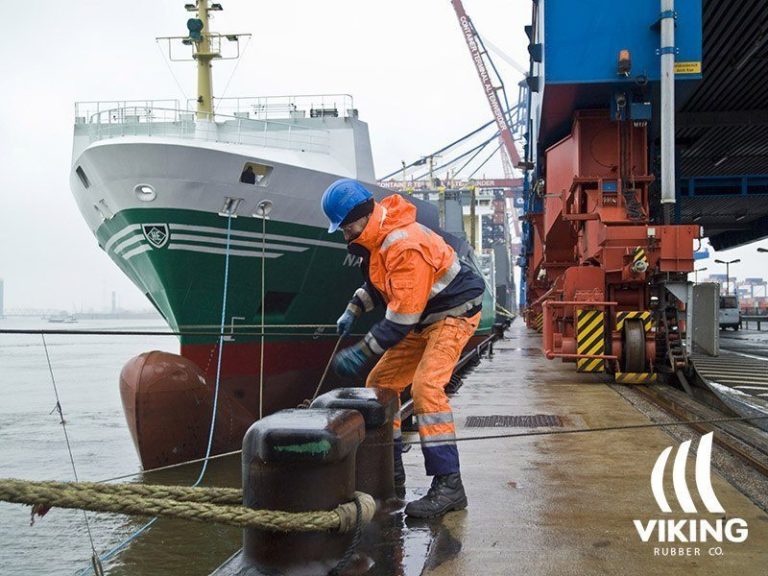
Why teaching your employees to say “No” is good business
Working conditions in the textile industry are often shrouded in darkness, hidden behind the allure of affordable products. Saying no is for many not an option, whether that is to overwork or underpay.rnrnAlthough the general trend points towards better conditions, behind the curtains, the textile industry’s global reach still conceals challenging working conditions endured by millions. While shocking stories occasionally emerge from distant factories, similar problems persist closer to home. Even in the UK, workers face unfair treatment.rnrnThe underlying philosophy (unsurprisingly) is that the cheaper the product, the better. If you can pressure a worker to take unpaid overtime, not go to the bathroom, suppress unions and prevent collective bargaining – then you have a cheaper product to sell. No doubt about it.rn
It’s about the workers
rnFor us it has always been about the workers. Even before we got certifications and third-party audits scrutinising how we treat our employees, this was our main focus. It was not something that we bragged about, shouted or pushed out in press releases. For us, it was – and is – about decency. We own our factory in Vietnam. Our workforce is not just a number in an excel sheet, they are part of our team.rnrnWe care deeply about the mental and physical well-being of our staff, and we know that sewing is a tough job. One of the initiatives that we have launched is physical exercise for all. Sitting down and sewing the whole day is hard and can lead to pain in the body. Therefore, several times per day, we stretch and work out together the whole factory. The time we spend on this compare to having a full-time employee only to do exercise. That would make for one really fit employee, but we have decided to spread it out so everyone gets a bit of exercise every day instead.rnrnWe have also engaged in a training programme where we are teaching our staff to say no to their bosses. If it sounds like a way to run an inefficient production machine, you are looking at it from the wrong angle. We want to make sure that our staff feel confident saying no and that they feel comfortable and safe when taking care of themselves. Even in a workplace that is far from blocked emergency exits, timed bathroom breaks and corporal punishments (the reality of many textile workers in the industry), we want to make sure that we are not creating an unhealthy work culture.rnrnFor us, it is not about the specific initiatives. Many other things could and can make sense to implement, but it is about the mindset by which we run our business. That mindset is that our employees is our colleagues and people worthy of the best life we can support for them.rn
Happy workers make better products
rnIt turns out that when people are engaged, they produce exceptional products. They have the power to spot and correct mistakes, free from constant pressure. They have the freedom to come up with ideas for how we can improve production and make better products (instead of thinking of when they can go to the bathroom).rnrnFor us, this is paramount. The clothes, we are making has to perform under wild conditions. When hanging 100 meters above the ground in foul weather maintaining a windmill, your gear just has to work. Simple as that.rn
A Brighter Future is on the Way
rnBut even if you are not making – og looking for – high performance workwear, the quality of life of the people making the products must be high. While EU legislation is pushing in the direction of social responsibility, we believe we need to move faster. We’re dedicated to improving the lives of our employees, but we recognize that the vast majority of textile workers worldwide face a different, much tougher, reality every workday. Both brands, consumers and business partners have the power to influence change in the textile industry.rn
What You Can Do
rnAlthough poor working conditions are a systemic problem, there are actions that can be done by the individual person, by you and me. Even asking about it will help make a difference. Here are some simple yet impactful questions you can ask:rn
- rn
- Do you own your own factories?
- What do you do to make your employees feel appreciated?
- Can you provide details about your supply chain transparency?
- What certifications or audits do you undergo to verify ethical practices?
- How do you support worker training and skill development?
rn
rn
rn
rn
rnWe don’t get these questions enough. We deeply care about our workers and about how we drive a business that is supporting better, happier and more meaningful lives for the people we hire. We hope to get more of these questions in the future.